Generic selectors
Exact matches only
Search in title
Search in content
Post Type Selectors

Adding Hardwood To Your Stairs has never been Easier

GTA Stair Capping Services

Double Spiral staircase with white modern spindles design Greater Toronto Area GTA

Stair Capping:

A Stylish Upgrade

How do you see your staircase?

Is it just a functional feature, or should it transform into a breathtaking centerpiece that redefines your home’s aesthetic? Think about it: your staircase is often one of the first things guests see when they enter your home. Shouldn’t it make a statement as remarkable as the rest of your space?

If you want more than just functionality, your staircase should mirror the elegance and character of your home. After all, a house is more than just kitchens and bathrooms—it’s a reflection of your unique style and personality.

So, how can you transform your GTA staircase into something modern and refreshed? While there are many options, few compare to the simplicity and elegance of stair capping.

Whether you’re upgrading your main entryway or modernizing your basement stairs, stair capping is an outstanding solution for staircase remodeling in the GTA. It delivers exceptional results that combine style and practicality.

Want to impress guests the moment they step inside? The first step is to work with a skilled and reputable stair remodeling expert.

Whether your staircase features triangular stair treads, curved steps on a spiral staircase, or simple straight treads, StairSteps has the technical expertise to flawlessly cap your existing treads and risers. We also focus on the design details, ensuring your staircase not only functions perfectly but looks stunning, leaving you thrilled with the results. We’ve seen a massive surge in Burlington and Whitby homeowners trading in their high-maintenance carpets for our solid hardwood capping, as it offers a much cleaner, more durable surface for busy households

Of course, a staircase is more than just the steps. Updating your stair railings often involves installing modern newel posts and stair spindles. We consult & provide everything needed to give your new stylish Glass Railing Installation, or a Wood Railing Installation the makeover you’ve been dreaming of.

Explore our Staircase Before and After Gallery or browse through our Staircase Project Gallery to see stunning transformations.

Ready to take the first step? Click below to request your Free Stair Capping Quote today!

Curious about how stair capping can transform your staircase into a breathtaking focal point while eliminating those pesky squeaks? Scroll down to learn more about Stair Capping below.

Finally, take your staircase remodel journey into your own hands with our Interactive Staircase Design Tool. Click the button below to start designing your dream staircase now!

Double Spiral staircase with white modern spindles design Greater Toronto Area GTA

Stair Capping:

A Stylish Upgrade

How do you see your staircase?
Is it just a functional feature, or should it transform into a breathtaking centerpiece that redefines your home’s aesthetic? Think about it: your staircase is often one of the first things guests see when they enter your home. Shouldn’t it make a statement as remarkable as the rest of your space?

If you want more than just functionality, your staircase should mirror the elegance and character of your home. After all, a house is more than just kitchens and bathrooms—it’s a reflection of your unique style and personality.

So, how can you transform your GTA staircase into something modern and refreshed? While there are many options, few compare to the simplicity and elegance of stair capping.

Whether you’re upgrading your main entryway or modernizing your basement stairs, stair capping is an outstanding solution for staircase remodeling in the GTA. It delivers exceptional results that combine style and practicality.

Want to impress guests the moment they step inside? The first step is to work with a skilled and reputable stair remodeling expert.

Whether your staircase features triangular stair treads, curved steps on a spiral staircase, or simple straight treads, StairSteps has the technical expertise to flawlessly cap your existing treads and risers. We also focus on the design details, ensuring your staircase not only functions perfectly but looks stunning, leaving you thrilled with the results. We’ve seen a massive surge in Burlington and Whitby homeowners trading in their high-maintenance carpets for our solid hardwood capping, as it offers a much cleaner, more durable surface for busy households

Of course, a staircase is more than just the steps. Updating your stair railings often involves installing modern newel posts and stair spindles. We consult & provide everything needed to give your new stylish Glass Railing Installation, or a Wood Railing Installation the makeover you’ve been dreaming of.

Explore our Staircase Before and After Gallery or browse through our Staircase Project Gallery to see stunning transformations.

Ready to take the first step? Click below to request your Free Stair Capping Quote today!

Curious about how stair capping can transform your staircase into a breathtaking focal point while eliminating those pesky squeaks? Scroll down to learn more about Stair Capping below.

Finally, take your staircase remodel journey into your own hands with our Interactive Staircase Design Tool. Click the button below to start designing your dream staircase now!

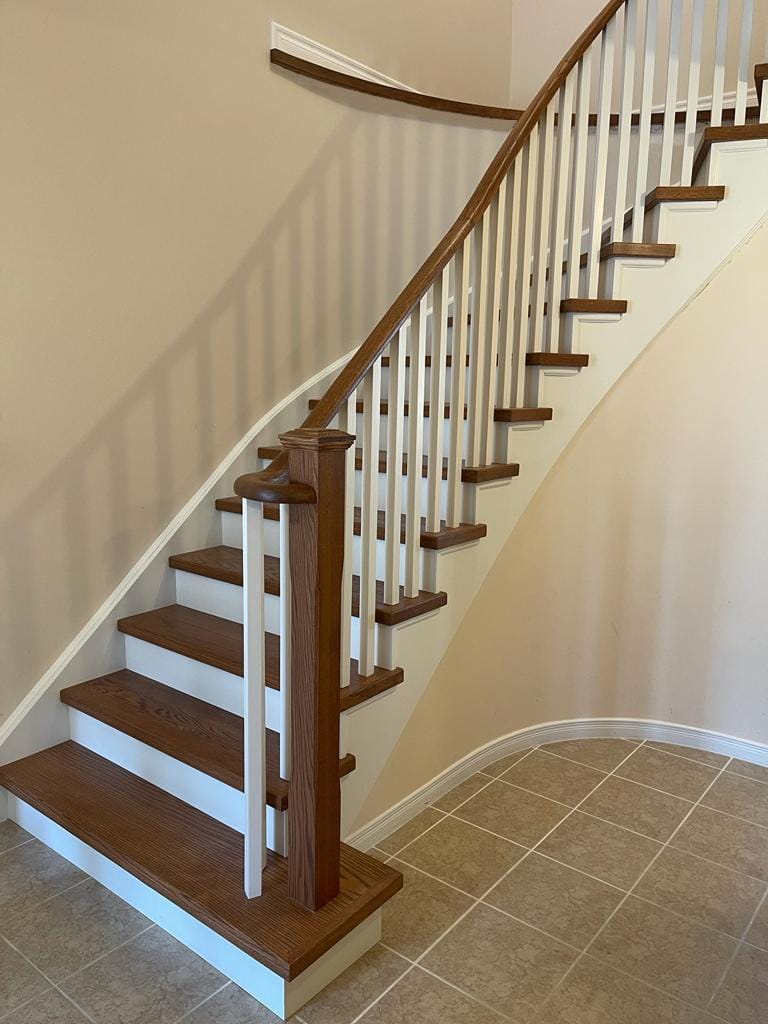
curved staircase capped with hardwood from Stairsteps

What is stair capping?

AKA (Also Known As), re-capping or false treads)

Refresh Your GTA Stairs Without Replacing ThemLooking to give your stairs a modern update without the cost of replacing the entire staircase? Stair capping is the perfect solution. Staircase capping, also known as refacing, involves transforming old, worn-out carpeted or wooden stairs into sleek, modern stairs. It’s one of the most elegant ways to enhance the look of your staircase, while complementing your existing decore’.

What is Stair Capping?

Stair capping is done by professionally installing stair tread caps, which are the horizontal surfaces you step on. These treads can be crafted from various wood types like Oak, Maple, Hickory, Walnut, or Jatoba, giving you plenty of options to match your home’s style.Hardwood is a popular choice for stair capping due to its rich tones and durability, making it perfect for high-traffic areas. Not only does it improve the look of your staircase, but it also makes it more practical and long-lasting.

Choosing the Right Stain Colour for Your Stairs

While some hardwoods are naturally stunning, you can customize their look with expert stair staining. The key is selecting a stain that matches or complements your hardwood flooring and home décor.
  • Lighter Stains: Create an open, airy feel and help your space appear larger. They’re ideal for a casual look and resist fading over time.
  • Darker Stains: Offer a bold, elegant look and give the illusion of a cozier, smaller space.
Lighting plays a big role in how your staircase stain looks. LED bulbs provide a cooler, white light, while incandescent bulbs add a warmer amber tone. Natural light from windows can also influence the colour. Not sure what will work best? The expert remodelers at StairSteps are here to guide you in choosing the perfect stain for your stairs.“Ready to Elevate Your Stairs? Make your stairs look amazing! Call us now or click the green button below to get your free quote.”Alternatively scroll down to learn more about Stair Capping Process. or click the button below and design your dream staircase with our Interactive Staircase Design Tool.

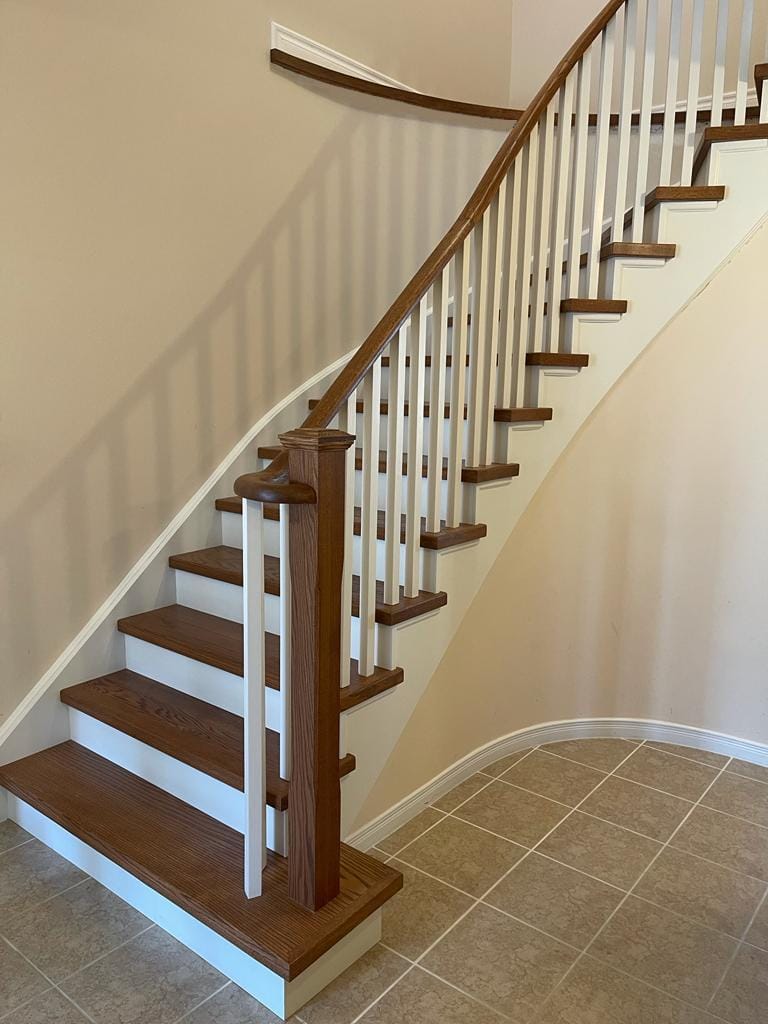
Curved spiral stair capping remodeling project with oak wood and white spindles in MississaugaWhat is stair capping?

AKA (Also Known As), re-capping or false treads)

Refresh Your GTA Stairs Without Replacing Them

Looking to give your stairs a modern update without the cost of replacing the entire staircase? Stair capping is the perfect solution. Staircase capping, also known as refacing, involves transforming old, worn-out carpeted or wooden stairs into sleek, modern stairs. It’s one of the most elegant ways to enhance the look of your staircase, while complementing your existing decore’.

What is Stair Capping?

Stair capping is done by professionally installing stair tread caps, which are the horizontal surfaces you step on. These treads can be crafted from various wood types like Oak, Maple, Hickory, Walnut, or Jatoba, giving you plenty of options to match your home’s style.

Hardwood is a popular choice for stair capping due to its rich tones and durability, making it perfect for high-traffic areas. Not only does it improve the look of your staircase, but it also makes it more practical and long-lasting.

Choosing the Right Stain Colour for Your Stairs

While some hardwoods are naturally stunning, you can customize their look with expert stair staining. The key is selecting a stain that matches or complements your hardwood flooring and home décor.

  • Lighter Stains: Create an open, airy feel and help your space appear larger. They’re ideal for a casual look and resist fading over time.
  • Darker Stains: Offer a bold, elegant look and give the illusion of a cozier, smaller space.

Lighting plays a big role in how your staircase stain looks. LED bulbs provide a cooler, white light, while incandescent bulbs add a warmer amber tone. Natural light from windows can also influence the colour.

Not sure what will work best? The expert remodelers at StairSteps are here to guide you in choosing the perfect stain for your stairs.

“Ready to Elevate Your Stairs?
Make your stairs look amazing! Call us now or click the green button below to get your free quote.”

Alternatively scroll down to learn more about Stair Capping Process. or click the button below and design your dream staircase with our Interactive Staircase Design Tool

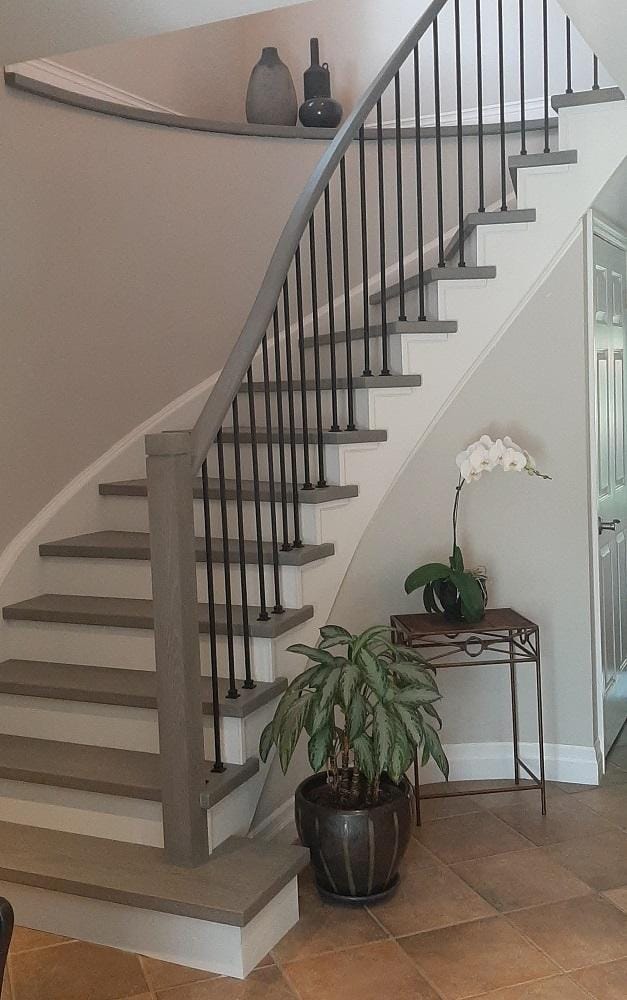
Curved staircase recapped in grey hardwood — modern stair renovation design in the GTA by StairSteps

What is the Stair Capping Process?

Capping stairs with hardwood is a popular and transformative renovation project that can completely change the look and feel of a home. It adds a timeless, elegant aesthetic while also providing durability that stands the test of time. However, capping stairs with hardwood is a detailed process that varies significantly depending on the shape of the treads. From common straight treads to more complex designs like pie-shaped treads and kite winders, each type of tread requires different techniques for manufacturing and installation. In addition, meticulous attention must be paid to managing dust and protecting the home during the project, removing old materials, installing the new hardwood, and perfecting the final finish.

Step 1: Dust Management and Preparation

Before any installation can begin, dust management is a crucial first step in the process. Hardwood stair capping typically involves removing old carpet, cutting existing stair nosings, all of which generate substantial amounts of dust. To minimize this dust from spreading throughout the home, we employ a proactive dust hindrance solution.

We use telescopic poles to hold up plastic sheeting that drapes around the workspace, creating a containment zone. This plastic barrier significantly reduces the amount of dust that can escape into other parts of the home. While it may not provide a completely dust-free solution, it drastically minimizes airborne particles, protecting the rest of the home and ensuring a cleaner work environment.

Step 2: Removing Existing Materials and Cutting Nosings

Once the dust management system is in place, the next step involves removing the old materials from the staircase. This could mean pulling up carpet, removing old stair caps, or cutting back existing stair nosings to prepare the surface for the new hardwood caps. Cutting the nosings is necessary to allow the new hardwood treads to fit flush against the risers, creating a smooth and professional finish. This step requires precision, as improper cutting can affect the appearance and stability of the final installation.

Step 3: Tread Manufacturing Based on Stair Shape

The shape of the stairs will largely dictate the manufacturing process for the hardwood treads. There are several different shapes of treads, each requiring specific techniques for manufacturing and installation.

Straight Treads

“For standard straight treads, the process is more complex than it seems.
Straight treads can’t just be cut to the width of the staircase because stringers are rarely perfectly straight. They can vary by more than 1/4″ from front to back. Additionally, there may be up to a 3-degree difference from the top to the bottom of the tread. In short, it’s not as simple as measuring and cutting—but don’t worry, that’s what we’re here for!”

Kite Winders

For more complex shapes like  kite winders (which are formed from two triangular treads with a “kite” or diamond-shaped tread sandwiched between them), templating is essential for accuracy. These irregularly shaped treads need to be precisely cut to fit the staircase, as even the slightest of errors in angles, or measurements can lead to gaps, uneven steps, or other installation issues. Templating involves creating an exact model of the tread shape, which is then used as a guide for cutting the hardwood to fit perfectly.

Pie Shaped Treads

Another common design is the spiral or curved staircase. These “pie shaped” stairs if build correctly will normally only need one template. But on occasion, every step is different, and many templates are needed. That’s where the fun begins!

Bullnose Treads

Another common design is the bullnose tread, typically found on the first step of a staircase. These rounded treads often need to be templated as well, due to their curved edges. The templating process ensures that the curved hardwood pieces fit the contour of the staircase perfectly, giving the first step a smooth and seamless finish.

Step 4: Installing Hardwood Treads and Risers

Once the treads and risers are manufactured and brought to the site, the installation process can begin. The exact installation method can vary depending on the specifics of the project. Sometimes, the hardwood treads and risers are pre-stained and varnished in the workshop before being brought to the site, allowing for quicker installation. Other times, the wood is installed first, and the staining and varnishing are done afterward. Regardless of the order, the installation itself must be done with great care. The treads and risers are meticulously installed, with attention paid to ensuring a perfect fit and alignment. Even the slightest misalignment can lead to uneven steps or gaps between the treads and stringers. Glue and nails are typically used to secure the hardwood in place, providing both stability and durability.

Step 5: Staining and Varnishing

Once the hardwood is installed, the next step is staining and varnishing. If the wood was not pre-finished, it will be stained on-site to the desired color. We always apply stain before painting any risers or stringers to avoid the issue of stain bleeding through painter’s tape, which can result in unsightly marks and imperfections. We take precautions to ensure that the stain is applied evenly and dries consistently, which is crucial for achieving the best final appearance. After staining, two coats of varnish are applied to the hardwood to protect the surface and enhance its beauty. Varnishing is not only about aesthetics; it also provides a durable finish that helps the stairs withstand daily wear and tear. Between coats, the varnish is lightly sanded and buffed to remove any grains that may have raised during the staining process. The varnish is what gives the stairs their final luster and durability, making this a critical part of the process.

Step 6: Painting the Risers and Stringers

Many homeowners opt to paint the risers and stringers white or another light color to contrast against the stained hardwood treads, as well as brighten up the area. Painting is done with meticulous care, especially when it comes to cutting in the edges. Crisp, clean lines are essential for achieving a professional look. Painter’s tape is carefully applied to protect the stained wood while painting, and each coat of paint is applied with precision to avoid drips, uneven coverage, or streaking.

Step 7: Finalizing the Balustrade System

Once the treads and risers are installed, stained, and finished, the focus shifts to the balustrade system, which includes the handrails, spindles, and newel posts. Depending on the staircase design, the balustrade may need to be refinished, painted, or replaced to ensure it complements the newly capped stairs.

In most cases, stair rails manufactured in the GTA after 1980 can be sanded, stained, and varnished to match the treads. However, replacing spindles (or pickets) and newel posts is often necessary. For example, if you’re modernizing your stairs, keeping an older, colonial-style balustrade might not align with your updated design. Creating a cohesive, contemporary look means upgrading the balustrade to match the style of the renovated staircase.

Conclusion

Capping stairs with hardwood is a detailed, multi-step process that requires careful planning and skilled craftsmanship. The process is dictated by the shape of the treads, with more complex shapes like pie treads and kite winders requiring custom templating for accurate cuts. Dust management is essential throughout the project to protect the home and ensure a clean work environment. Once the old materials are removed, new treads and risers are installed with precision, followed by staining, varnishing, and painting. Finally, the balustrade system is addressed to ensure a complete, polished finish. When done correctly, hardwood stair capping can completely transform a staircase, adding beauty, value, and durability to the home.

“Ready to Elevate Your Stairs?
Make your stairs look amazing! Call us now or click the green button below to get your free quote.”

Or hit the below button to check out our stair design tool

What is the Stair Capping Process?

Capping stairs with hardwood is a popular and transformative renovation project that can completely change the look and feel of a home. It adds a timeless, elegant aesthetic while also providing durability that stands the test of time. However, capping stairs with hardwood is a detailed process that varies significantly depending on the shape of the treads. From common straight treads to more complex designs like pie-shaped treads and kite winders, each type of tread requires different techniques for manufacturing and installation. In addition, meticulous attention must be paid to managing dust and protecting the home during the project, removing old materials, installing the new hardwood, and perfecting the final finish.

Step 1: Dust Management and Preparation

Before any installation can begin, dust management is a crucial first step in the process. Hardwood stair capping typically involves removing old carpet, cutting existing stair nosings, all of which generate substantial amounts of dust. To minimize this dust from spreading throughout the home, we employ a proactive dust hindrance solution.

We use telescopic poles to hold up plastic sheeting that drapes around the workspace, creating a containment zone. This plastic barrier significantly reduces the amount of dust that can escape into other parts of the home. While it may not provide a completely dust-free solution, it drastically minimizes airborne particles, protecting the rest of the home and ensuring a cleaner work environment.

Step 2: Removing Existing Materials and Cutting Nosings

Once the dust management system is in place, the next step involves removing the old materials from the staircase. This could mean pulling up carpet, removing old stair caps, or cutting back existing stair nosings to prepare the surface for the new hardwood caps. Cutting the nosings is necessary to allow the new hardwood treads to fit flush against the risers, creating a smooth and professional finish. This step requires precision, as improper cutting can affect the appearance and stability of the final installation.

Step 3: Tread Manufacturing Based on Stair Shape

The shape of the stairs will largely dictate the manufacturing process for the hardwood treads. There are several different shapes of treads, each requiring specific techniques for manufacturing and installation.

Straight Treads

“For standard straight treads, the process is more complex than it seems.
Straight treads can’t just be cut to the width of the staircase because stringers are rarely perfectly straight. They can vary by more than 1/4″ from front to back. Additionally, there may be up to a 3-degree difference from the top to the bottom of the tread. In short, it’s not as simple as measuring and cutting—but don’t worry, that’s what we’re here for!”

Kite Winders

For more complex shapes like  kite winders (which are formed from two triangular treads with a “kite” or diamond-shaped tread sandwiched between them), templating is essential for accuracy. These irregularly shaped treads need to be precisely cut to fit the staircase, as even the slightest of errors in angles, or measurements can lead to gaps, uneven steps, or other installation issues. Templating involves creating an exact model of the tread shape, which is then used as a guide for cutting the hardwood to fit perfectly.

Pie Shaped Treads

Another common design is the spiral or curved staircase. These “pie shaped” stairs if build correctly will normally only need one template. But on occasion, every step is different, and many templates are needed. That’s where the fun begins!

Bullnose Treads

Another common design is the bullnose tread, typically found on the first step of a staircase. These rounded treads often need to be templated as well, due to their curved edges. The templating process ensures that the curved hardwood pieces fit the contour of the staircase perfectly, giving the first step a smooth and seamless finish.

Step 4: Installing Hardwood Treads and Risers

Once the treads and risers are manufactured and brought to the site, the installation process can begin. The exact installation method can vary depending on the specifics of the project. Sometimes, the hardwood treads and risers are pre-stained and varnished in the workshop before being brought to the site, allowing for quicker installation. Other times, the wood is installed first, and the staining and varnishing are done afterward. Regardless of the order, the installation itself must be done with great care. The treads and risers are meticulously installed, with attention paid to ensuring a perfect fit and alignment. Even the slightest misalignment can lead to uneven steps or gaps between the treads and stringers. Glue and nails are typically used to secure the hardwood in place, providing both stability and durability.

Step 5: Staining and Varnishing

Once the hardwood is installed, the next step is staining and varnishing. If the wood was not pre-finished, it will be stained on-site to the desired color. We always apply stain before painting any risers or stringers to avoid the issue of stain bleeding through painter’s tape, which can result in unsightly marks and imperfections. We take precautions to ensure that the stain is applied evenly and dries consistently, which is crucial for achieving the best final appearance. After staining, two coats of varnish are applied to the hardwood to protect the surface and enhance its beauty. Varnishing is not only about aesthetics; it also provides a durable finish that helps the stairs withstand daily wear and tear. Between coats, the varnish is lightly sanded and buffed to remove any grains that may have raised during the staining process. The varnish is what gives the stairs their final luster and durability, making this a critical part of the process.

Step 6: Painting the Risers and Stringers

Many homeowners opt to paint the risers and stringers white or another light color to contrast against the stained hardwood treads, as well as brighten up the area. Painting is done with meticulous care, especially when it comes to cutting in the edges. Crisp, clean lines are essential for achieving a professional look. Painter’s tape is carefully applied to protect the stained wood while painting, and each coat of paint is applied with precision to avoid drips, uneven coverage, or streaking.

Step 7: Finalizing the Balustrade System

Once the treads and risers are installed, stained, and finished, the focus shifts to the balustrade system, which includes the handrails, spindles, and newel posts. Depending on the staircase design, the balustrade may need to be refinished, painted, or replaced to ensure it complements the newly capped stairs.

In most cases, stair rails manufactured in the GTA after 1980 can be sanded, stained, and varnished to match the treads. However, replacing spindles (or pickets) and newel posts is often necessary. For example, if you’re modernizing your stairs, keeping an older, colonial-style balustrade might not align with your updated design. Creating a cohesive, contemporary look means upgrading the balustrade to match the style of the renovated staircase.

Conclusion

Capping stairs with hardwood is a detailed, multi-step process that requires careful planning and skilled craftsmanship. The process is dictated by the shape of the treads, with more complex shapes like pie treads and kite winders requiring custom templating for accurate cuts. Dust management is essential throughout the project to protect the home and ensure a clean work environment. Once the old materials are removed, new treads and risers are installed with precision, followed by staining, varnishing, and painting. Finally, the balustrade system is addressed to ensure a complete, polished finish. When done correctly, hardwood stair capping can completely transform a staircase, adding beauty, value, and durability to the home.

“Ready to Elevate Your Stairs?
Make your stairs look amazing! Call us now or click the green button below to Get Your Free Quote.

Or hit the below button to check out our stair design tool